







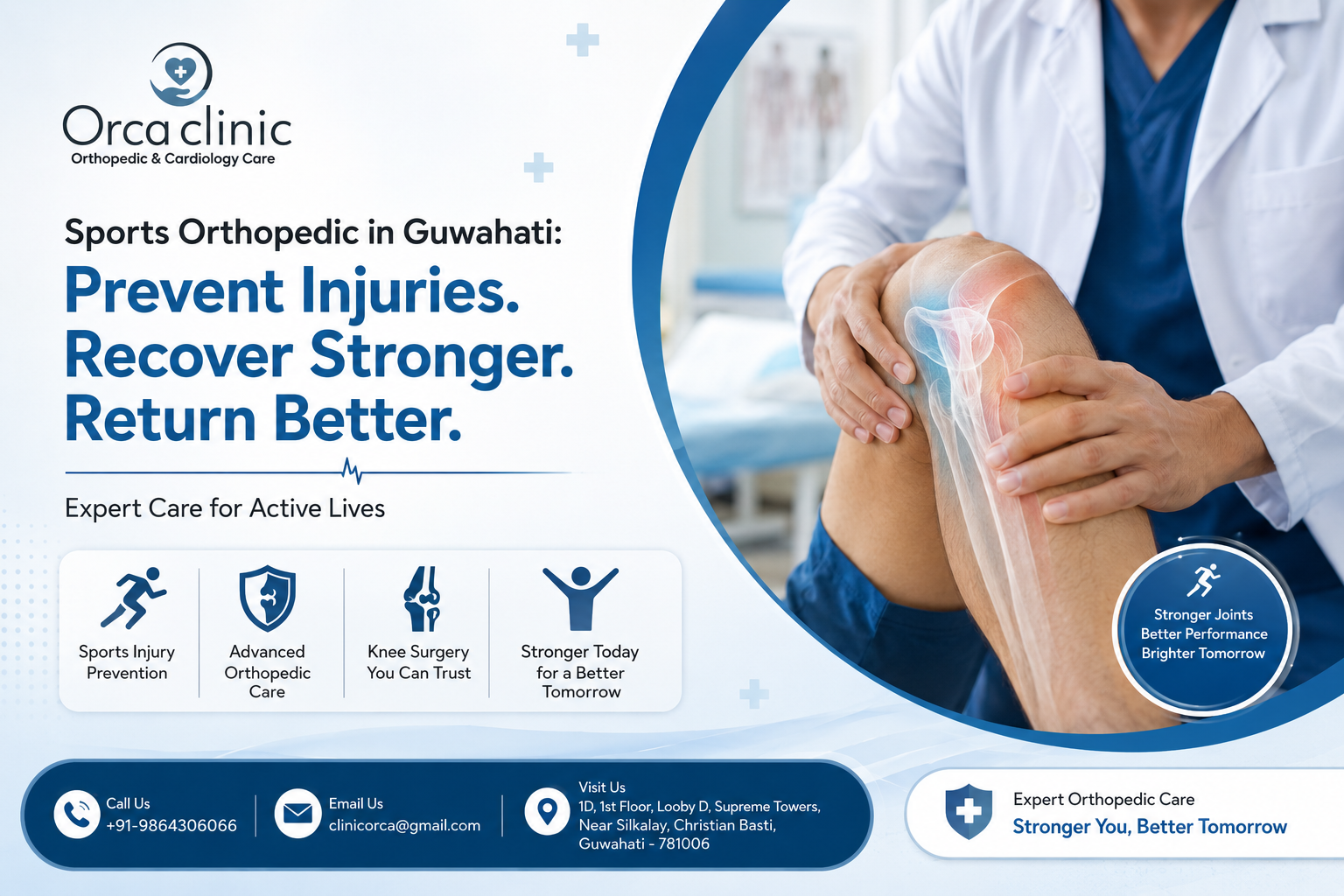
Sports Orthopedic in Guwahati: What Active People Need to Know About Preventing Injuries and Treating Knee Problems
Guwahati has quietly turned into a city of joggers, cricket weekends, badminton courts, and gym memberships. Walk through Nehru Park, the riverside stretch near Fancy Bazar, or any turf ground on a Sunday morning, and you will see it people of every age trying to stay fit after years of a sedentary routine. That is a good thing. But with more people running, playing, and lifting, local orthopedic clinics are also seeing a steady rise in knee pain, ligament sprains, and joint injuries that could have been avoided with the right precautions.
This is where a bit of knowledge about sports injury prevention, and knowing when to consult a sports orthopedic specialist, makes a real difference. This guide walks through both how to protect your joints before something goes wrong, and what to expect if you ever need orthopedic knee surgery in Guwahati.
Why Sports Injuries Are Becoming More Common in Guwahati
A few years ago, most orthopedic visits in the city were related to age-related joint wear or accident injuries. That pattern has shifted. Weekend football leagues, marathon training groups, badminton clubs, and CrossFit-style gyms have brought in a new wave of patients many of them in their 20s and 30s with ligament tears, meniscus injuries, and overuse conditions.
Part of the reason is simple: people are jumping into intense activity without building a base of strength or flexibility first. Uneven playing surfaces, humid weather that affects muscle recovery, and inadequate warm-up routines add to the risk. None of this means people should stop being active it means the approach to training needs to be smarter, and injuries need to be caught early by someone who understands sports-related joint mechanics, not just general orthopedic conditions.
Sports Injury Prevention in Guwahati:Practical Steps That Actually Work
Prevention is not complicated, but it does require consistency. These are the habits our team at Orca Clinic recommends most often to athletes and weekend players across Guwahati:
Warm up with purpose, not just habit. A five-minute jog before a football match isn’t a warm-up, it’s barely a start. Dynamic stretches that mimic the movements of your sport (lunges, high knees, lateral shuffles) prepare muscles and tendons far better than static stretching alone.
Strengthen the muscles around your joints. Most knee and ankle injuries happen because the surrounding muscles quadriceps, hamstrings, calves are not strong enough to absorb sudden force. Basic strength training two to three times a week reduces this risk significantly.
Respect recovery days. Playing through soreness or skipping rest because of a tournament schedule is one of the most common reasons we see recurring injuries. Muscles and ligaments need 24 to 48 hours to repair after intense activity.
Choose the right footwear for the surface. Playing on cement courts, artificial turf, or uneven fields each puts different stress on your joints. Worn-out or wrong-category shoes are an easy fix that many people overlook.
Don’t ignore early signs. Mild swelling, a slight limp, or discomfort that lingers after a game are your body’s way of asking for attention before a small issue becomes a torn ligament or a stress fracture.
If you follow a consistent routine and still notice pain that doesn’t settle within a few days, that’s the point where a proper evaluation by a specialist matters more than rest alone.
What Does a Sports Orthopedic in Guwahati Actually Treat?
A sports orthopedic specialist is not just a general bone doctor this is someone trained specifically in the injuries that occur during physical activity, where the mechanism of injury and the recovery goals are different from an everyday fracture.
At Orca Clinic, this includes conditions such as:
- ACL and other ligament tears, common in football, basketball, and badminton players
- Meniscus and cartilage injuries that cause locking, swelling, or a clicking sensation in the knee
- Rotator cuff and shoulder injuries, often seen in swimmers and players of throwing sports
- Stress fractures in runners and dancers from repetitive impact
- Tendonitis conditions like tennis elbow and shin splints
- Dislocations and fractures from falls or collisions during play
The distinction matters because treatment for an athlete isn’t only about healing the injury. It is about restoring the exact range of motion, strength, and confidence needed to return to sport safely, without the injury recurring a few months later.
When Knee Pain Needs More Than Rest: Signs to Watch For
Not every knee ache needs surgery, and not every twist needs an X-ray. But certain signs are worth taking seriously:
- Pain that persists for more than a week despite rest and ice
- A feeling of the knee “giving way” or feeling unstable while walking or climbing stairs
- Visible swelling that doesn’t reduce within 48 hours
- A locking sensation, where the knee gets briefly stuck in one position
- Sudden, sharp pain after a fall, twist, or direct hit during a game
Any of these symptoms warrant a proper clinical assessment. Ignoring them often leads to compensatory movement patterns that create secondary problems in the hip or the other knee.
Orthopedic Knee Surgery in Guwahati: What It Involves and When It is Needed
Surgery is never the first option at Orca Clinic, it is considered only after conservative treatments like physiotherapy, bracing, and activity modification haven’t resolved the problem, or when the injury itself is severe enough that surgical repair is the only realistic path back to normal function.
Here is what typically leads to a recommendation for orthopedic knee surgery in Guwahati:
Complete ligament tears (ACL/PCL). A fully torn ACL usually does not heal on its own, particularly for anyone who wants to return to sport or an active lifestyle. Reconstruction surgery, followed by structured rehabilitation, is often the recommended route.
Significant meniscus tears. Depending on the location and pattern of the tear, this may involve arthroscopic repair or partial removal of damaged cartilage.
Advanced joint degeneration. For older patients or those with long-standing arthritis that has worn down the joint significantly, joint replacement surgery may offer far better long-term mobility than continued conservative management.
Fractures involving the joint surface. Some fractures around the knee require surgical fixation to restore proper alignment and prevent long-term joint damage.
Modern knee surgery, especially arthroscopic procedures, involves small incisions, shorter hospital stays, and considerably faster recovery compared to older surgical techniques. That said, the outcome depends heavily on an accurate diagnosis first which is why a detailed clinical examination, supported by imaging, always comes before any surgical decision.
Recovery: What Comes After Orthopedic Knee Surgery
Surgery is really just one part of getting back to full function. Recovery timelines vary depending on the procedure, but the general phases look like this:
- Early recovery (weeks 1–2): Managing swelling and pain, protecting the joint, and beginning gentle movement under guidance.
- Rebuilding strength (weeks 3–8): Structured physiotherapy to restore range of motion and rebuild muscle support around the joint.
- Return to activity (2–6 months): Gradually reintroducing sport-specific movements, with a focus on preventing re-injury rather than rushing back.
Patients who follow their rehabilitation plan closely, rather than stopping physiotherapy once the pain subsides, tend to have significantly better long-term outcomes and a much lower chance of re-injury.
Why Orca Clinic for Sports Injury Prevention and Knee Care in Guwahati
At Orca Clinic, sports injury care isn’t treated as a one-time consultation. It is a continuum that starts with prevention advice, moves through accurate diagnosis when something does go wrong, and continues through surgical care and physiotherapy when needed. Our approach includes:
- Assessment by an experienced orthopedic surgeon with a focus on sports-related conditions
- Both non-surgical and surgical treatment pathways, chosen based on what genuinely suits the patient
- On-site physiotherapy and guided rehabilitation, so recovery does not depend on juggling multiple clinics
- Long-term prevention guidance to reduce the chance of repeat injuries, not just symptom relief
You can read more about our approach to Sports Injury Management, or explore related services such as Joint Replacement Surgery, Trauma & Fracture Treatment, and Arthritis & Osteoporosis Care for conditions that often overlap with sports-related joint problems.
For more insights on orthopedic and joint health topics relevant to Guwahati residents, you can also browse our health blog.
Frequently Asked Questions
What is the best way to start sports injury prevention in Guwahati if I am just getting back into fitness?
Start with a gradual increase in intensity rather than jumping straight into competitive-level activity. Pair this with proper warm-ups, basic strength training, and good footwear suited to where you play. If you have any pre-existing joint concerns, a quick consultation with an orthopedic specialist before starting can help you train without setbacks.
How do I know if I need to see a sports orthopedic in Guwahati instead of a general physician?
If your injury happened during physical activity a sprain, a fall, a joint that clicks or locks, or pain that limits movement a sports orthopedic specialist is better equipped to assess the specific mechanics involved and guide you toward the right recovery path, whether that is physiotherapy or further intervention.
Is orthopedic knee surgery in Guwahati always necessary for a torn ligament?
Not always. It depends on which ligament is affected, the severity of the tear, your activity goals, and your age. Partial tears or injuries in patients who don’t plan to return to high-intensity sport are sometimes managed successfully with physiotherapy and bracing. A thorough evaluation is the only way to know which path applies to you.
How long does recovery take after knee surgery?
It varies by procedure, but most patients see noticeable improvement within 6 to 8 weeks, with full return to sport typically taking anywhere from 3 to 6 months, depending on the extent of the surgery and how consistently rehabilitation is followed.
Can sports injuries be prevented completely?
No approach eliminates risk entirely, but consistent strength training, proper technique, adequate rest, and early attention to minor symptoms can prevent the majority of common sports injuries seen in active individuals.
What should I do immediately after a sports injury, before seeing a doctor?
Follow basic first-response care rest the joint, apply ice, use light compression if possible, and keep the limb elevated. Avoid putting weight on a joint that feels unstable, and get it examined as soon as possible rather than waiting to see if it “settles on its own.”
If you are dealing with a nagging sports injury, recurring knee pain, or simply want a prevention plan before your next season of play, the team at Orca Clinic is here to help. Book an appointment with our orthopedic specialists in Guwahati and get a clear, personalized plan for staying active without the setbacks.